Development notes: 15–16 October 2026 · Written: 20 October 2026
I'm building Ireonna, a temperament test app, for Apps in Toss. The first result screen said 추진표현형—roughly, “Driven–Expressive.” I couldn't tell much about the temperament from that name alone.
In the previous post, I'd made the first screens and tried them. The buttons took me to the right places, but the explanations on the results screen still needed work.
Adding the traditional temperament names
Expressive, Driven, Reflective, Steady. I'd chosen these labels to make the ideas easier to understand. But I still needed to read the descriptions, so the names might be even less helpful to someone new to the test. I asked AI to include the traditional names: sanguine, choleric, melancholic, and phlegmatic. Seeing “Choleric · Driven” together might help someone connect it to a term they'd heard before.
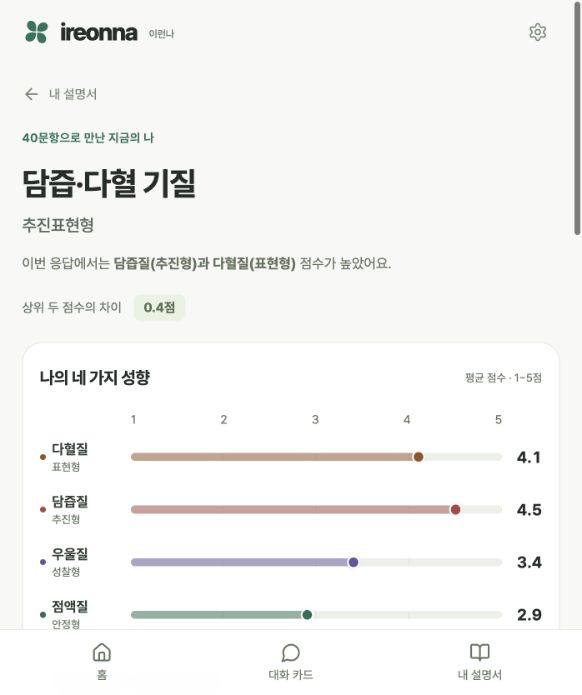
Captured 15 October 2026 · Original Korean development screen after the label change. The scores come from test answers.
Even then, “high scores in choleric and sanguine” felt vague. What might that combination look like at work or with friends? Some examples would help me understand it.
Asking for everyday examples
This time, I asked:
Explain the characteristics of a primary and secondary temperament together on the results screen. Everyday examples would make them easier to understand.
The request above is translated from Korean. AI added examples about starting a team project and planning a trip with friends: arranging dates and transport while sharing photos of places to visit. I found those easier to picture than descriptions such as “action and execution” or “interaction and expression.”
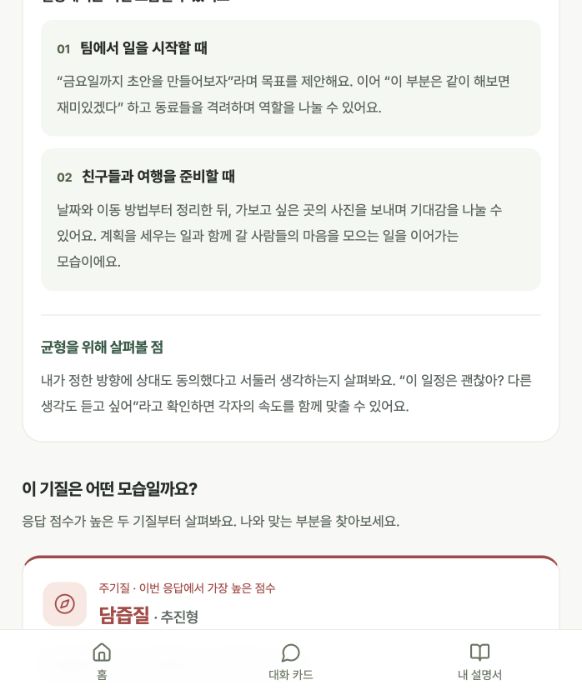
Captured 15 October 2026 · Part of the combination explanation. These are examples written for the app, not accounts from real users.
Revising the conversation cards, too
Reading the examples reminded me of the conversation cards already in the app. Knowing my temperament wouldn't necessarily help me turn down a manager's request or tell a friend I'd been hurt. I wanted people to be able to choose a sentence for situations like those.
Some people might prefer a gentle approach; others might be more comfortable being brief and direct. I wanted people to be able to pick wording that sounded like them. I also wanted the card to include “Please speak to me like this” alongside what they wanted to say.
I asked for a more specific sequence: read the temperament explanation, choose a situation, then pick and edit a sentence. For an extra-work request, I could add the work already on my plate and how much help I could offer to draft a reply.
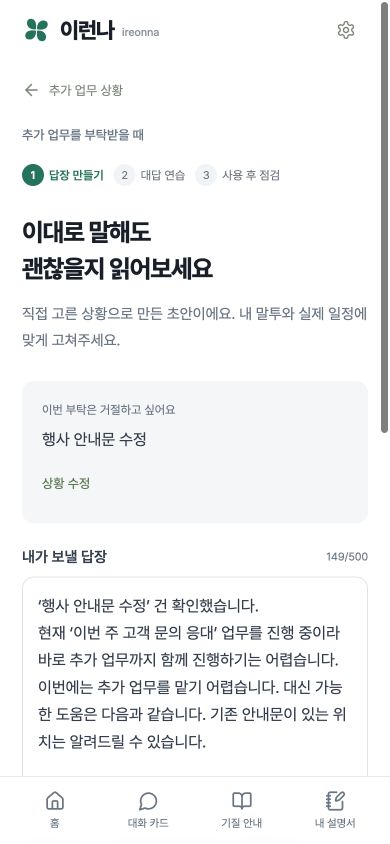
Captured 15 October 2026 · An extra-work reply draft. The tasks and schedule are example inputs used to check the flow.
I still need to check whether those sentences would be useful in an actual conversation. Something can look fine on a screen and feel awkward to say out loud.
In the next post, I'll write about changing the home screen and the result card design. I ended up rewriting quite a bit of the card text, too.